
Last updated November 24, 2026
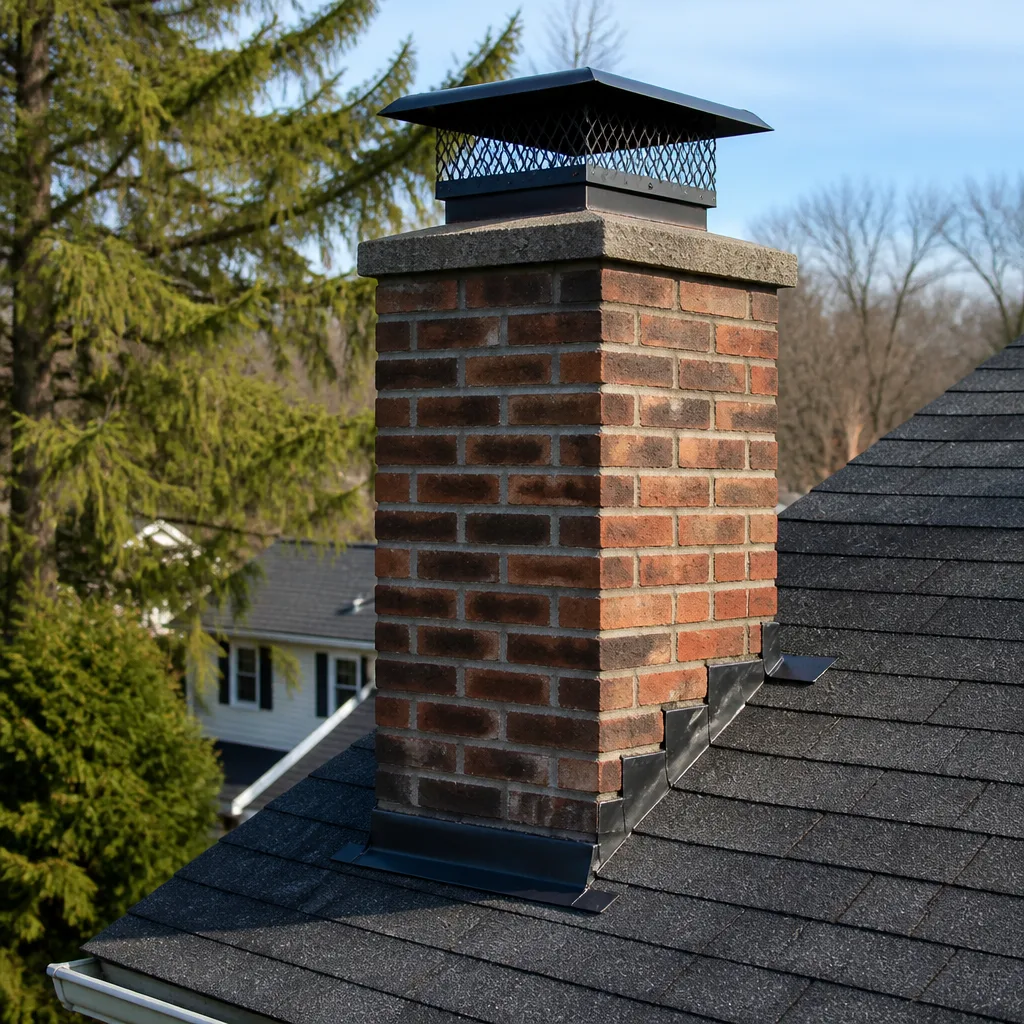 Sweep & inspection
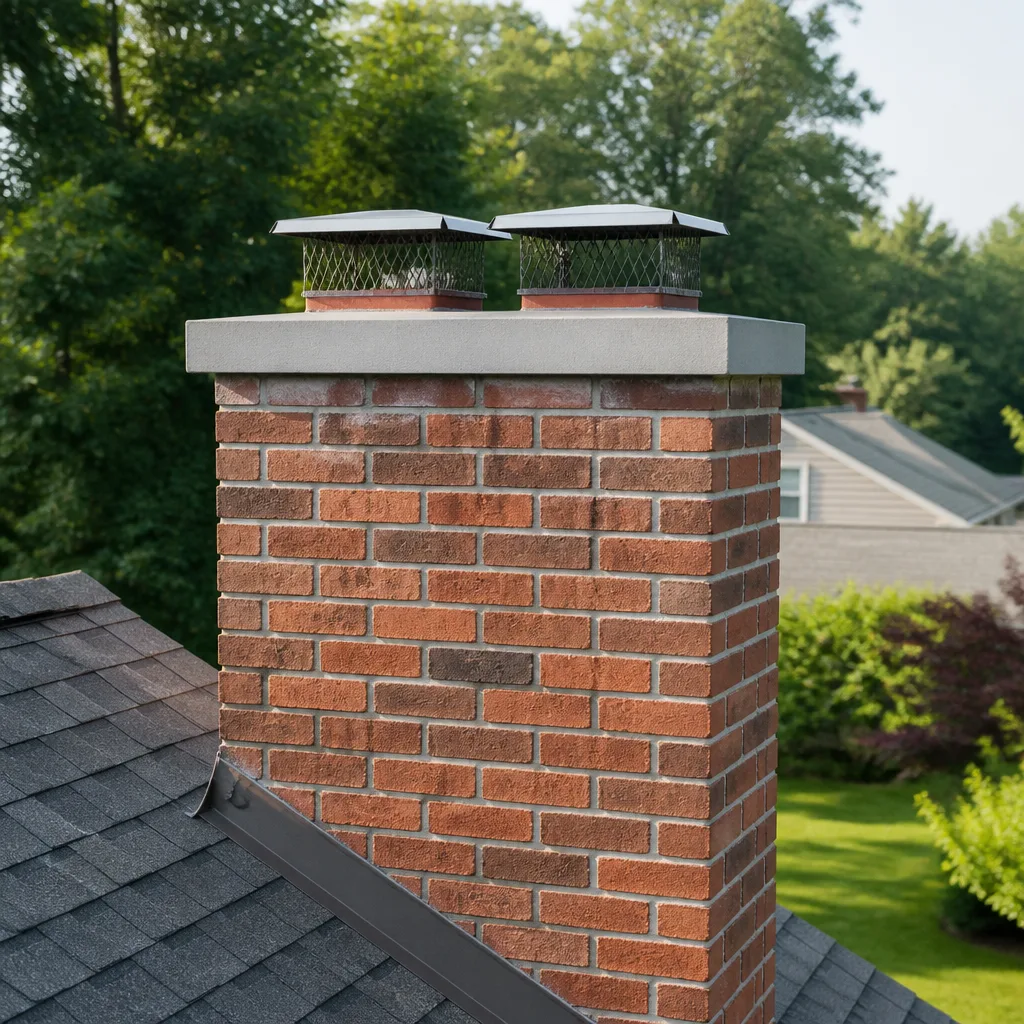 Caps & crowns
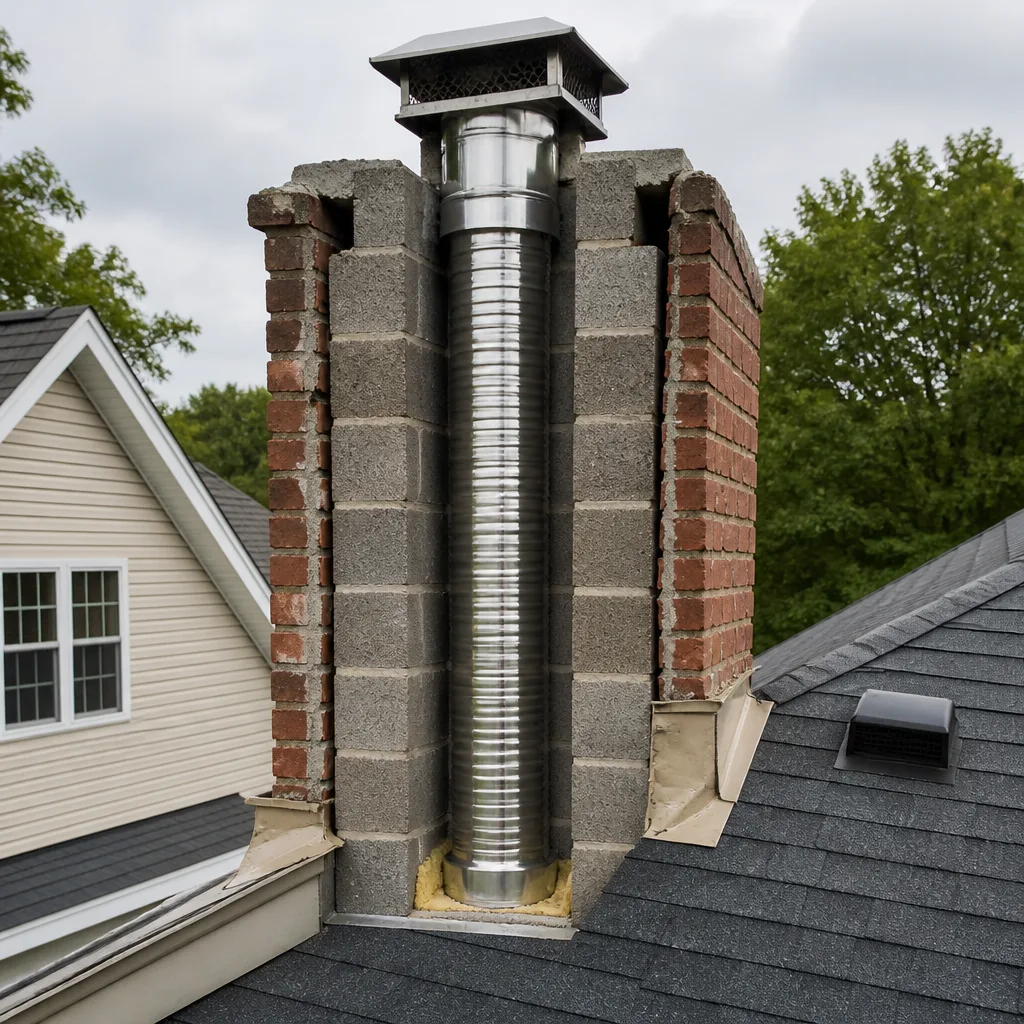 Flue relining
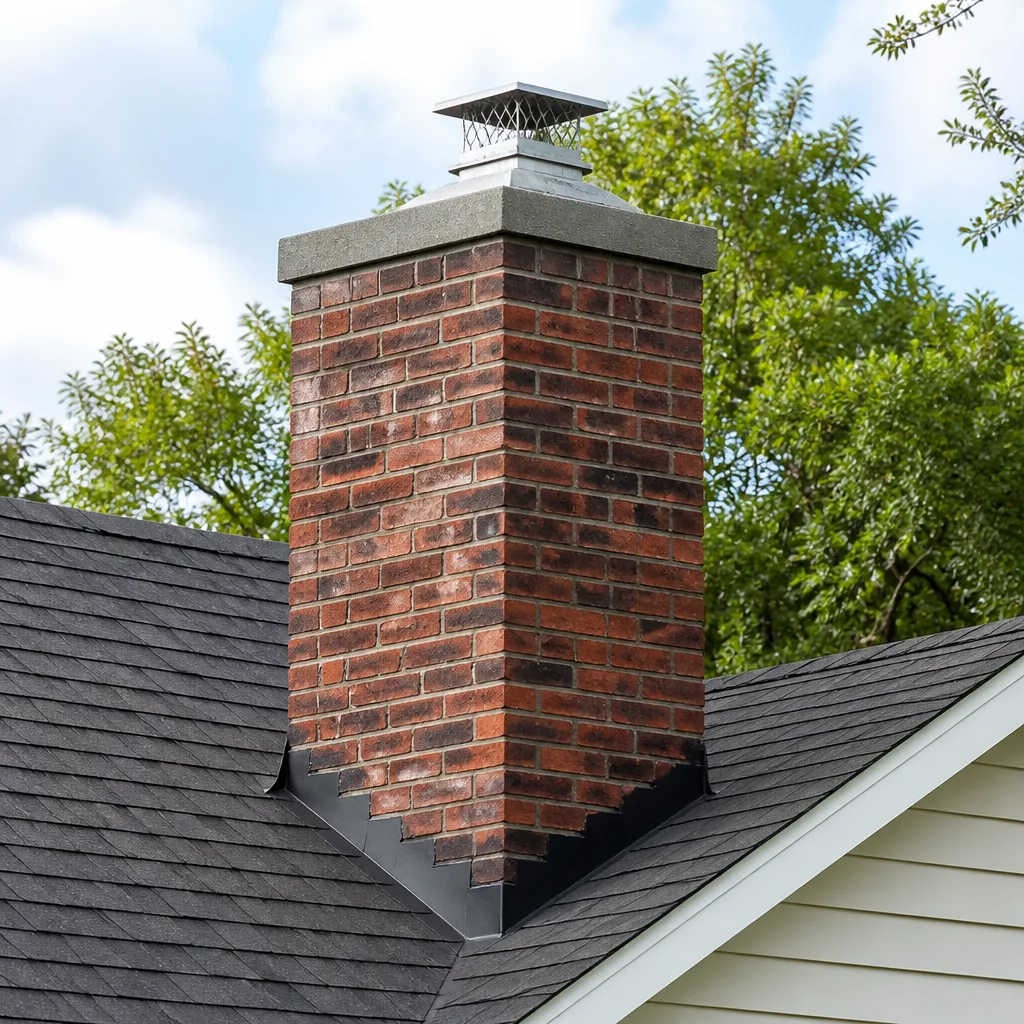 Masonry repair
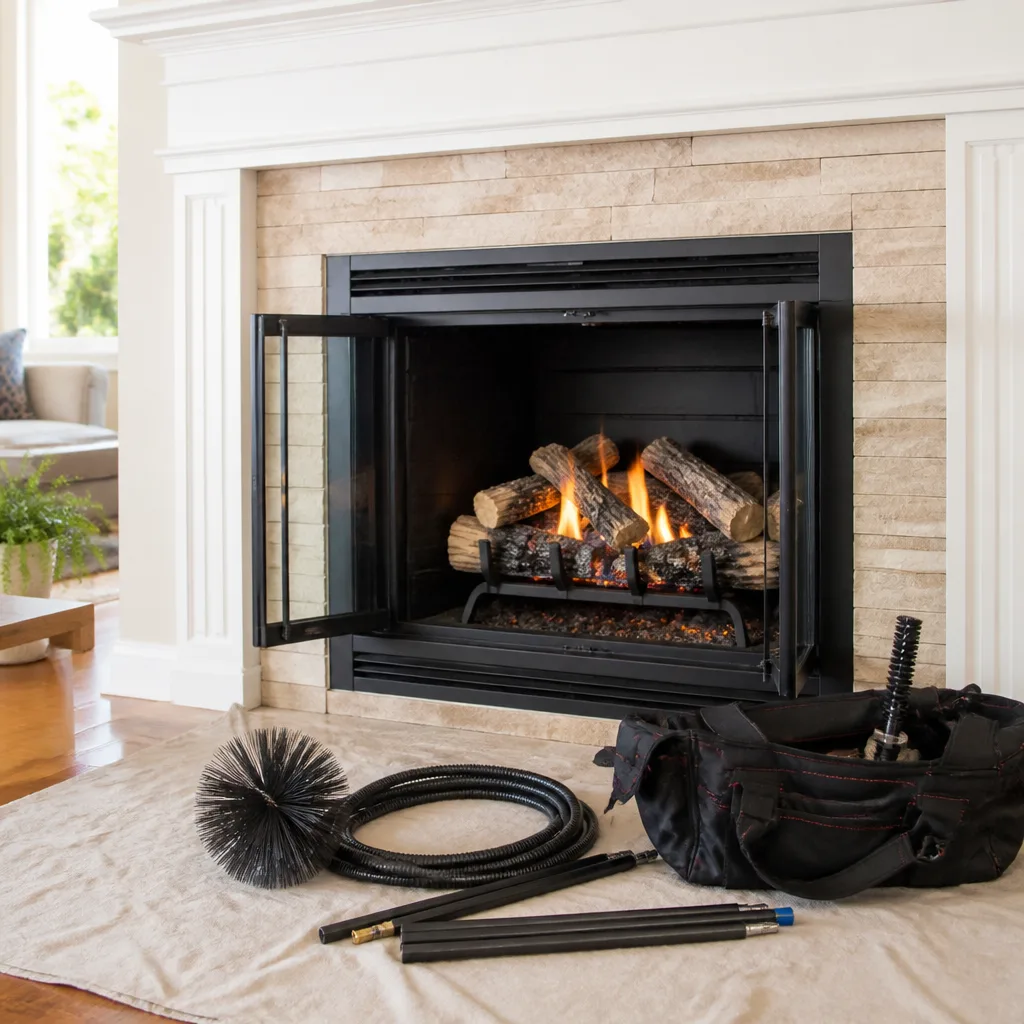 Gas fireplace service
Level 1 sweep and inspection to the NFPA 211 annual standard - flue, crown, cap, and flashing checked and photographed
Chimney sweep logs do not sweep chimneys. They loosen some creosote - which then falls where a brush and vacuum still have to collect it.
DIY vs Professional Chimney Cleaning: The Huntington Beach Homeowner’s Decision Guide
You can buy a chimney brush kit online for about $40 and clean your flue this weekend. The question isn’t whether you’re physically able to – it’s whether cleaning is actually the only thing your chimney needs right now. Most homeowners assume a sweep is a sweep, and that the only difference between doing it yourself and hiring someone is the bill. That assumption is where trouble starts. A brush removes soot from the parts you can reach and see. It says nothing about the condition of your liner, your smoke chamber, your crown, or the joints behind the firebox where heat and moisture do their quiet work. This guide walks through what DIY cleaning can and can’t accomplish, when a professional sweep is genuinely required, and how to decide which camp your chimney falls into. We’ll keep it specific to how chimneys behave in Huntington Beach, because the local conditions matter more than most generic advice admits.
Quick Answer
DIY chimney cleaning is reasonable only when your flue has light, dry, powdery soot, you’ve had a professional inspection in the recent past that confirmed the liner is sound, and you have no animal nesting, no glaze, and no moisture issues. In every other case – and especially if you’ve never had the chimney inspected or you’ve noticed staining, a cracked crown, or a damaged cap – professional cleaning is the right call, because the value isn’t just the brush work. It’s the camera inspection and the diagnosis that come with it.
Styles & brands we work with
- Sweep & inspection
- Caps & crowns
- Flue relining
- Masonry repair
- Gas fireplace service
Table of Contents
- What DIY Cleaning Physically Can and Cannot Accomplish
- When Professional Cleaning Is Non-Negotiable
- The Equipment Reality Check
- Liability and Insurance After a DIY Sweep
- The DIY vs Professional Decision Matrix
- How a Professional Sweep Actually Works
- Huntington Beach Conditions That Change the Calculus
- Common Mistakes to Avoid
- When to Call a Professional
- Frequently Asked Questions
What DIY Cleaning Physically Can and Cannot Accomplish
A homeowner with a brush and rods can do exactly one thing well: knock loose, dry soot off the interior walls of the flue. That’s a real function and it isn’t nothing. Dry, powdery soot that’s been building for a season or two in a lightly used fireplace will come off with a stiff poly brush, and the flue will look cleaner from the top down. If your chimney is a straight, accessible flue with a clay tile liner in good shape and you’ve burned clean, dry wood, a DIY brush pass is roughly the equivalent of the brushing portion of a professional sweep.
What a brush cannot do is just as important to understand. Here’s the gap in plain terms:
- Liner integrity: A clay tile liner can crack, spall, or separate at the joints without any visible sign from the firebox or the top. You only see it with a camera. A cracked liner is a fire pathway into the framing, and brushing doesn’t reveal it.
- Smoke chamber condition: The smoke chamber is the sloped area above the damper and below the flue. It collects soot on surfaces a straight brush never touches, and its shape affects how the chimney drafts. A brush doesn’t clean the chamber properly and doesn’t assess it.
- Creosote stage: Soot is stage 1. Stage 2 is flaky and crusty. Stage 3 is glazed like hardened tar. A brush will move stage 2 with effort, but stage 3 needs rotary equipment and chemical treatment. A homeowner with a hand brush and a hopeful attitude won’t budge it.
- Animal nesting: Birds, squirrels, and chimney swifts build nests that a brush will push around but rarely clear cleanly. Nests can also sit behind the damper in places the rod can’t reach around. Clearing them safely takes a professional setup.
- Exterior condition: The crown and cap aren’t part of a brush job at all, and they’re the two components that do the most to keep water out of a chimney.
This is why the honest answer to “can I clean my own chimney?” is “yes, but a clean chimney isn’t the same as a safe one.” The difference between a DIY pass and a professional service isn’t effort – it’s the inspection that comes with it. For a full breakdown of what that inspection covers, our chimney sweep page walks through it step by step.
When Professional Cleaning Is Non-Negotiable
Some conditions flip the decision instantly. If any of the following describe your chimney in Huntington Beach, a brush in your hands this weekend is the wrong move and a professional sweep is the required one:
- Stage 2 or stage 3 creosote. If you can see flaky, crusty, or shiny glaze when you look up the flue with a flashlight, that’s not soot. That’s fuel waiting for a spark. It requires rotary sweeping and, for glaze, chemical treatment. A hand brush will not fix it.
- Any animal activity. If you’ve heard scratching, seen droppings in the firebox, or noticed a bird flying toward the chimney, you have a nesting problem. Removing it safely – especially if there’s a live bird or a nest close to the damper – takes equipment and a trained eye.
- Uncertain liner condition. If you’ve never had a camera inspection, you don’t actually know what your liner looks like. Clay tile fails at the joints and hairline cracks are invisible from the bottom. In that state, a cleaning without an inspection is a job half done.
- Water staining, a damaged cap, or a cracked crown. These are signs moisture is already working on the masonry. Cleaning doesn’t address them, and skipping them lets the damage spread. Cap and crown work is one of the most common things we address on a first visit – our chimney cap & crown page explains why.
- Any liner replacement or relining need. If the inspection finds a failed liner, that’s a different category of work entirely, and it’s not something a homeowner should consider touching. Flexible liner systems like those from DuraFlex and Olympia Chimney exist specifically because a proper reline has to fit a flue that wasn’t built for it.
- Smoke coming back into the room, poor draft, or strong odors. These are diagnostic symptoms, not cleaning problems. The fix starts with figuring out what’s causing them.
If you check any of the six above, stop and book a professional sweep. The brushing is the easy part. The diagnosis is what you’re actually paying for.
The Equipment Reality Check
The $40 brush kit you’re picturing has its limits, and it’s worth being honest about what a full professional setup costs. A single homeowner buying for one use typically gets a poly brush in one size, a set of flexible rods, and maybe a shop vac attachment. That works for a straight, standard-sized flue with light soot. It does not work for most chimneys that have been used for more than a few seasons.
Here’s what professional-grade equipment actually involves, and why it matters:
- Correctly sized brushes in multiple diameters. A brush that’s too small doesn’t contact the flue walls. A brush that’s too big jams. Flues come in different shapes and sizes and one kit rarely covers them all.
- Rotary sweeping equipment. For stage 2 and 3 creosote, the pros use a motorized rotary head with the right whip or chain. That’s a several-hundred-dollar tool before you buy a single rod.
- HEPA vacuum with a sealed connection. A shop vac blows fine soot back into the room. A proper chimney vacuum contains it. If your living room smells like an ashtray for a week after, that’s a vacuum problem, not a cleaning problem.
- Inspection camera. This is the real line. A camera lets a technician see the liner, the smoke chamber, and the flue joints. Without one, “clean” is a guess.
- Drop cloths, containment, and ladder safety gear. A roof is not a ladder platform. Professional setups account for that.
By the time a homeowner buys the right brushes, an extension rod set, a HEPA vacuum, and a camera, they’ve spent more than several professional sweeps would cost – and they’ve bought tools they’ll use once. That’s not a sales pitch. It’s the arithmetic, and it’s the same arithmetic every homeowner should do before deciding.
Liability and Insurance After a DIY Sweep
This is the part most guides skip, and it’s the one that matters most after a chimney fire. If a chimney fire happens and the homeowner has been cleaning their own flue, the question an insurance adjuster and a fire investigator will both ask is: was the chimney maintained to a professional standard, and is there documentation of that maintenance? A homeowner who swept their own chimney has no written record, no inspection report, and no photographic evidence of the flue’s condition at the time of the last cleaning. That’s a thin position to be in when a claim is on the line.
California doesn’t require a permit to sweep a chimney, and nothing in state law stops you from cleaning your own flue. But maintenance records matter in ways that don’t show up until you need them. A professional sweep produces a written record: what was found, what was cleaned, what the camera showed, and what was recommended. If you ever sell the home, that file is a selling point. If you ever file an insurance claim, that file is your evidence. If you ever need to prove the chimney was sound at a given date, that file is what you have.
There’s another angle: DIY work can void certain warranties or coverage clauses if an insurer determines the cleaning was performed improperly. That’s not a scare tactic, it’s a fine-print reality. Most policies don’t have a “no DIY” clause, but they do expect maintenance to have been performed to a reasonable standard. A $40 brush and a weekend isn’t the standard an adjuster is looking for.
We can work with your insurer if a chimney issue turns into a claim. That’s a different conversation than deciding whether to DIY in the first place, but it’s worth knowing before you pull the trigger on the brush kit.
The DIY vs Professional Decision Matrix
Here’s the section that answers the question most readers actually came for. Use this as a decision tool – look at each characteristic of your chimney, and the answer is on the right.
- Light, dry, powdery soot only (stage 1) + camera inspection within the last 12 months confirming a sound liner + no animal activity + no water staining: DIY is reasonable. Brush it, capture the soot, and get a professional inspection on schedule.
- Light soot + you’ve never had a camera inspection: Professional. You don’t know what the liner looks like, and that’s the point of the visit.
- Flaky, crusty, or glazed creosote visible in the flue: Professional. Stage 2 and 3 require rotary and chemical treatment.
- Any animal nesting or signs of birds/squirrels: Professional. Safe removal and a full inspection after.
- Water staining, cracked crown, damaged cap, or rust on the firebox: Professional. This is a moisture problem, and cleaning doesn’t fix it.
- Smoke rollback, poor draft, or recurring odors: Professional. These are diagnostic, not cleaning, issues.
- A chimney you’ve used heavily for multiple seasons without any prior inspection: Professional. You’re overdue, and a brush won’t tell you what you need to know.
- Fireplace or wood stove that hasn’t been used in years, and you’re planning to start using it again: Professional. A pre-use inspection catches the things that sit and rot when a chimney goes cold for years.
| Chimney Characteristic | DIY Reasonable? | Professional Required? |
|---|---|---|
| Light dry soot, recent inspection, sound liner | Yes | Optional (but worth it) |
| Stage 2 or 3 creosote | No | Yes |
| Animal nesting or evidence of activity | No | Yes |
| Cracked crown, damaged cap, water staining | No | Yes |
| No camera inspection in recent memory | No | Yes |
| Smoke rollback, drafts, odors | No | Yes |
| Long-unused chimney, restarting use | No | Yes |
Notice how lopsided the matrix is. DIY occupies one line out of seven, and even that line assumes you’ve had a professional inspection recently. That’s not because DIY is never an option – it’s because most chimneys that have been used for a few seasons have at least one of the “professional required” characteristics. If you’re unsure which line describes your chimney, the honest answer is to book the inspection and find out.
How a Professional Sweep Actually Works
Homeowners often don’t know what they’re comparing against when they weigh DIY versus professional, so here’s the sequence of a proper sweep. This is the general process, not a specific job:
- Protect the room. Drop cloths and a sealed vacuum connection at the firebox before any brush work starts. A clean sweep should leave the room cleaner than it found it.
- Inspect first, brush second. A camera goes up the flue before brushing, so the technician can see what’s there and document it. This is the step DIY skips entirely.
- Clear the firebox and smoke chamber. The firebox and the smoke chamber above the damper collect soot the flue brush never reaches. These get individual attention.
- Sweep the flue to the correct stage. Poly brushes for stage 1, rotary heads and chemical treatment for stage 2 and 3. The brush is matched to the flue size and shape.
- Clear the flue cap and flue top from the roof, when accessible. A sweep from the top down is often how the flue gets fully cleaned; the cap gets checked at the same time.
- Inspect again after cleaning. A second camera pass confirms the flue is clear and lets the technician document any liner or joint issues the cleaning exposed.
- Walk the homeowner through findings. This is the step that separates a sweep from a self-service brush. The technician shows what the camera saw, what was found, and what (if anything) needs action. Nothing is recommended without photographic evidence the homeowner can see.
That last point matters more than any of the others. A professional sweep should never leave you with a vague recommendation to spend thousands of dollars on a liner or a masonry repair you can’t verify. If the flue is fine, the flue is fine, and we say so. If the liner has failed at a joint, you should be looking at the same photo we are, and you should understand why the recommendation to reline exists.
The other thing a full-service sweep gives you is a single relationship for the whole system. From the firebox to the crown, the inspection covers every component – which means you’re not coordinating a sweep from one company and a masonry repair from another. Our fireplace repair work is the same relationship. So is the cap and crown work. The point is that the person diagnosing your chimney is the person fixing it.
Huntington Beach Conditions That Change the Calculus
Chimneys in Huntington Beach live in a specific set of conditions that push the DIY vs professional decision in a particular direction. This is where generic advice about chimney care breaks down, and it’s worth understanding before you decide.
First, the marine layer. Huntington Beach gets regular overnight marine moisture that settles on rooftops and works its way into masonry and metal over time. That moisture shows up as staining on the exterior of the chimney, rust on the firebox and damper, and deterioration of the crown and cap. None of these are things a brush addresses. If you’re cleaning your own flue and you don’t notice the staining on the crown or the rust on the damper, you’re cleaning one part of a system while the rest is quietly degrading. That’s the local condition that makes the professional route more valuable here than it would be in, say, a dry mountain town.
Second, the burn pattern. Most Huntington Beach fireplaces get seasonal use – fires on cool winter nights, not a daily burn like in colder climates. That means creosote builds more slowly, but it also builds unevenly and often goes unexamined for longer stretches. A chimney that only sees fires a few dozen times a season can look fine from the firebox and have significant soot and moisture issues higher up. The seasonal burn pattern actually makes inspection more important, not less, because the homeowner has less day-to-day familiarity with how the chimney is behaving.
Third, the housing stock. A lot of Huntington Beach homes have masonry chimneys with clay tile liners that were installed decades ago, and those liners are showing their age. A camera inspection is how you find out if the liner is sound. A brush tells you nothing about it. If the liner needs relining, a flexible system like DuraFlex is often the right call because it can be installed in a flue that a rigid liner can’t navigate – a technical capability that separates a specialist from a basic sweeper. If the liner is deteriorating but not failed, HeatShield restoration is often the alternative to full relining, and it’s a repair method most general contractors can’t perform at all.
For a closer look at how the whole sweep process fits together with these local conditions, our Huntington Beach Chimney Sweep overview page is the right place to start.
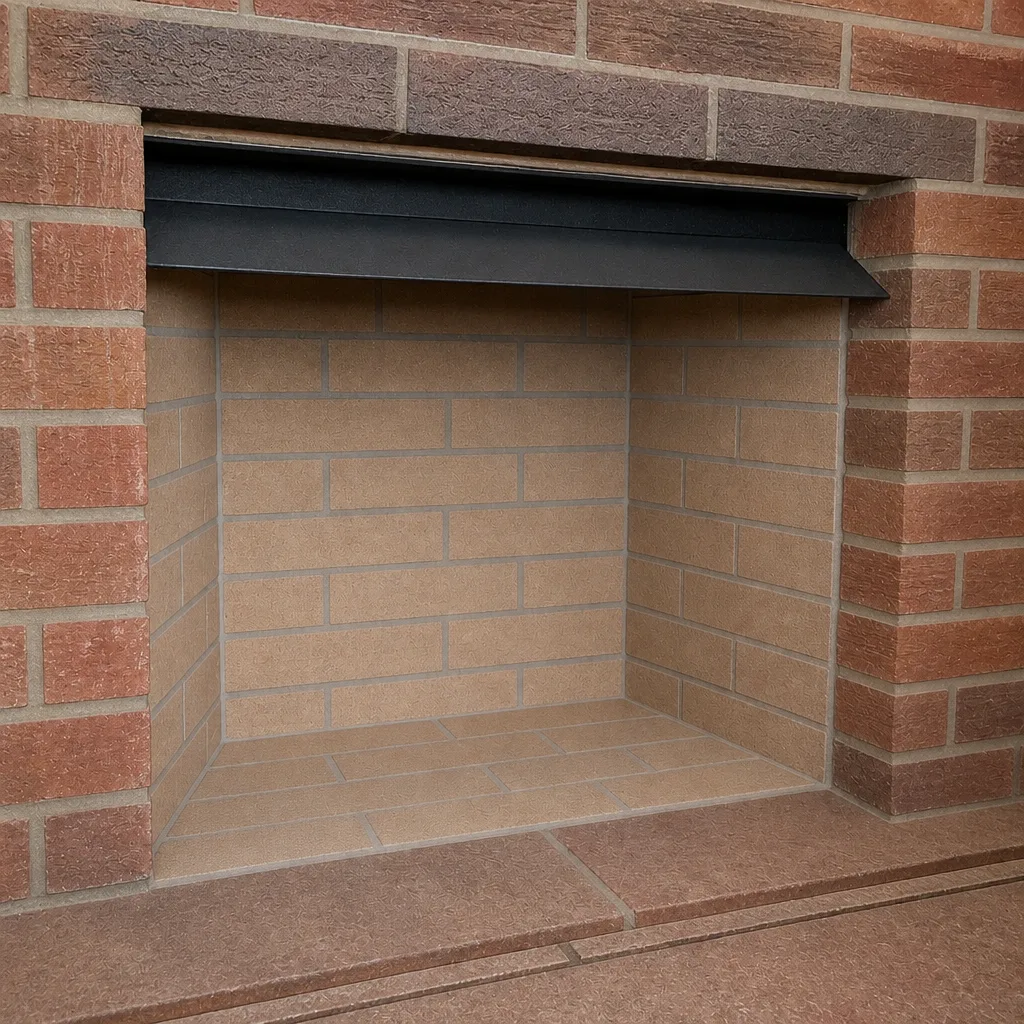
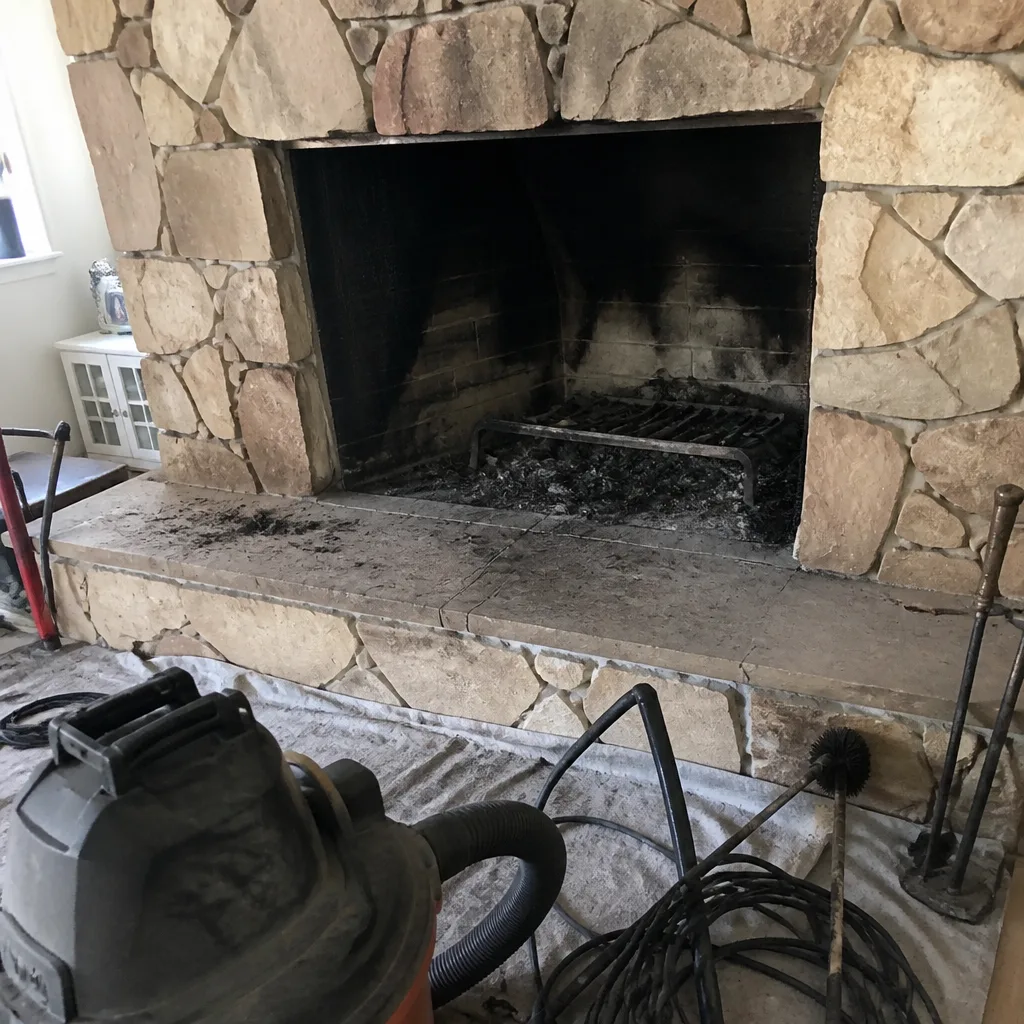
See the difference
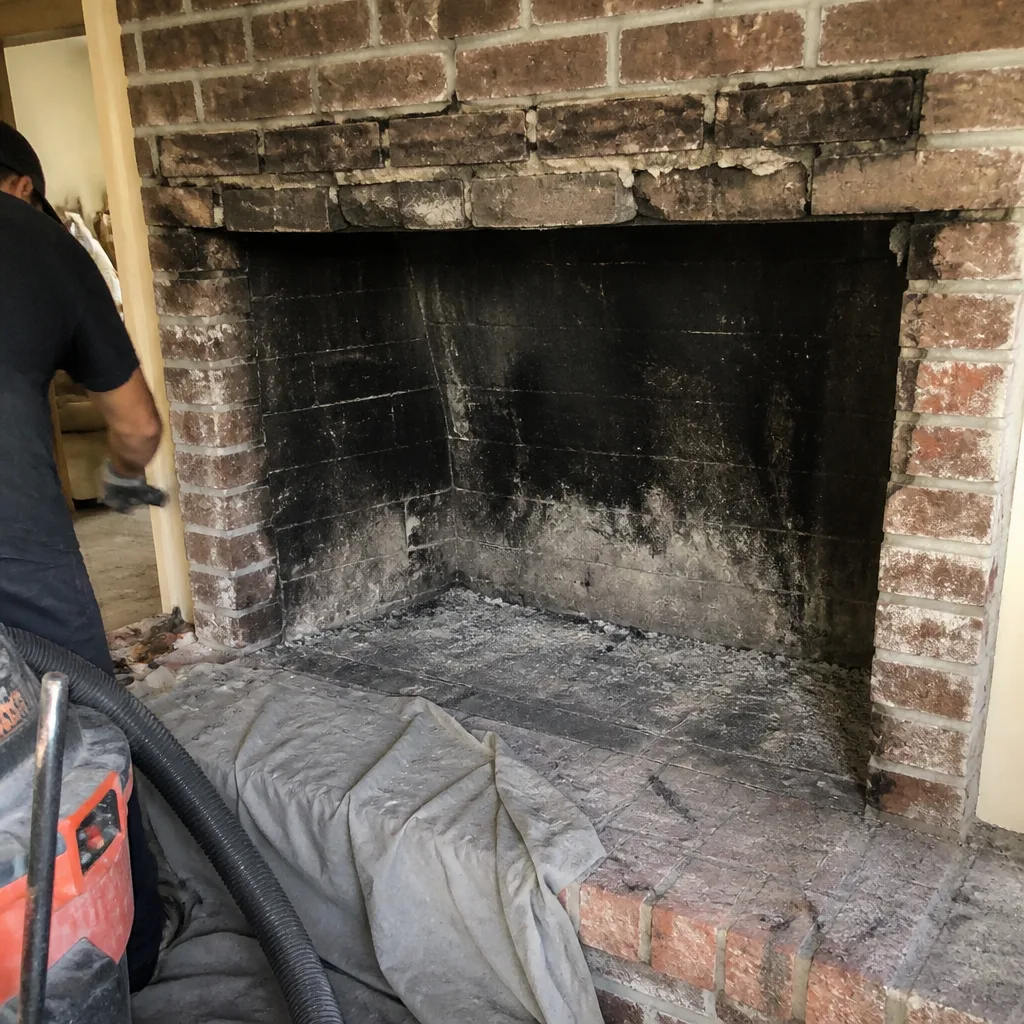 Before
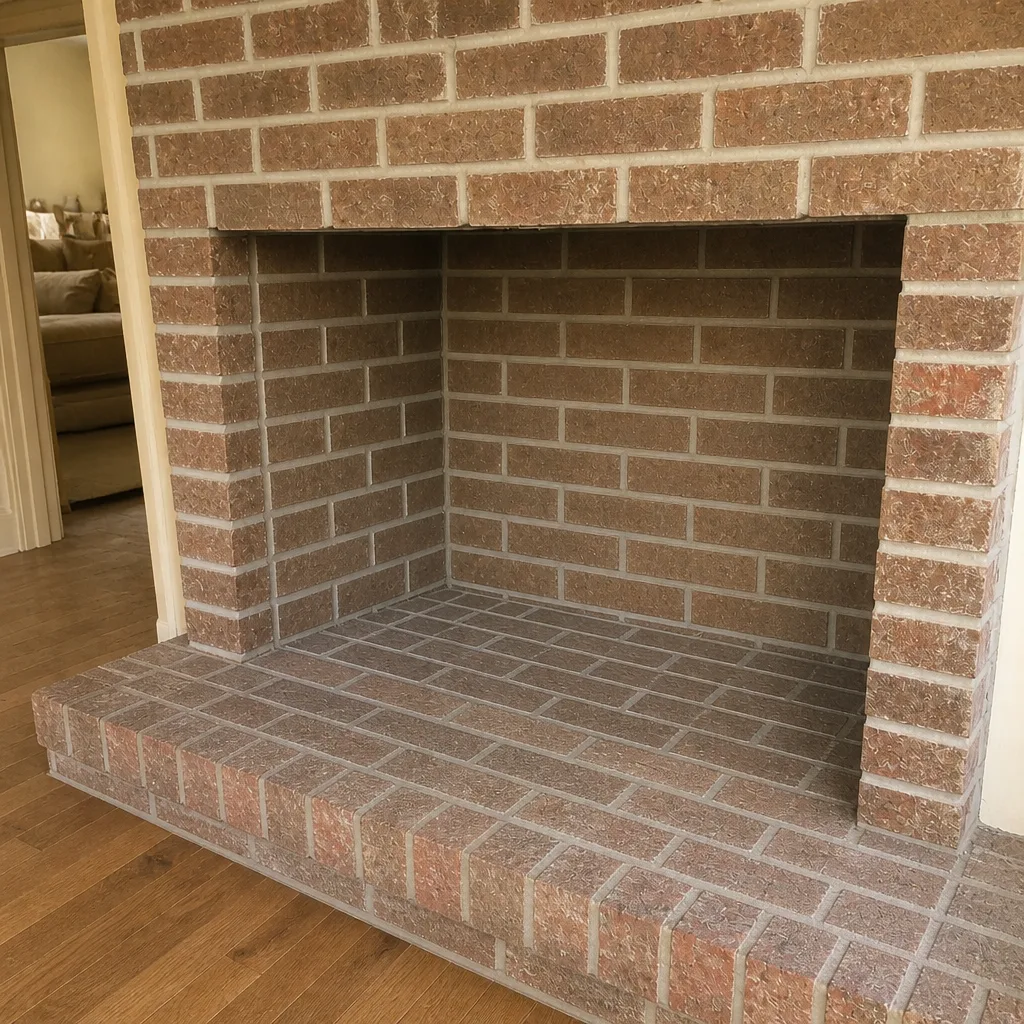 After
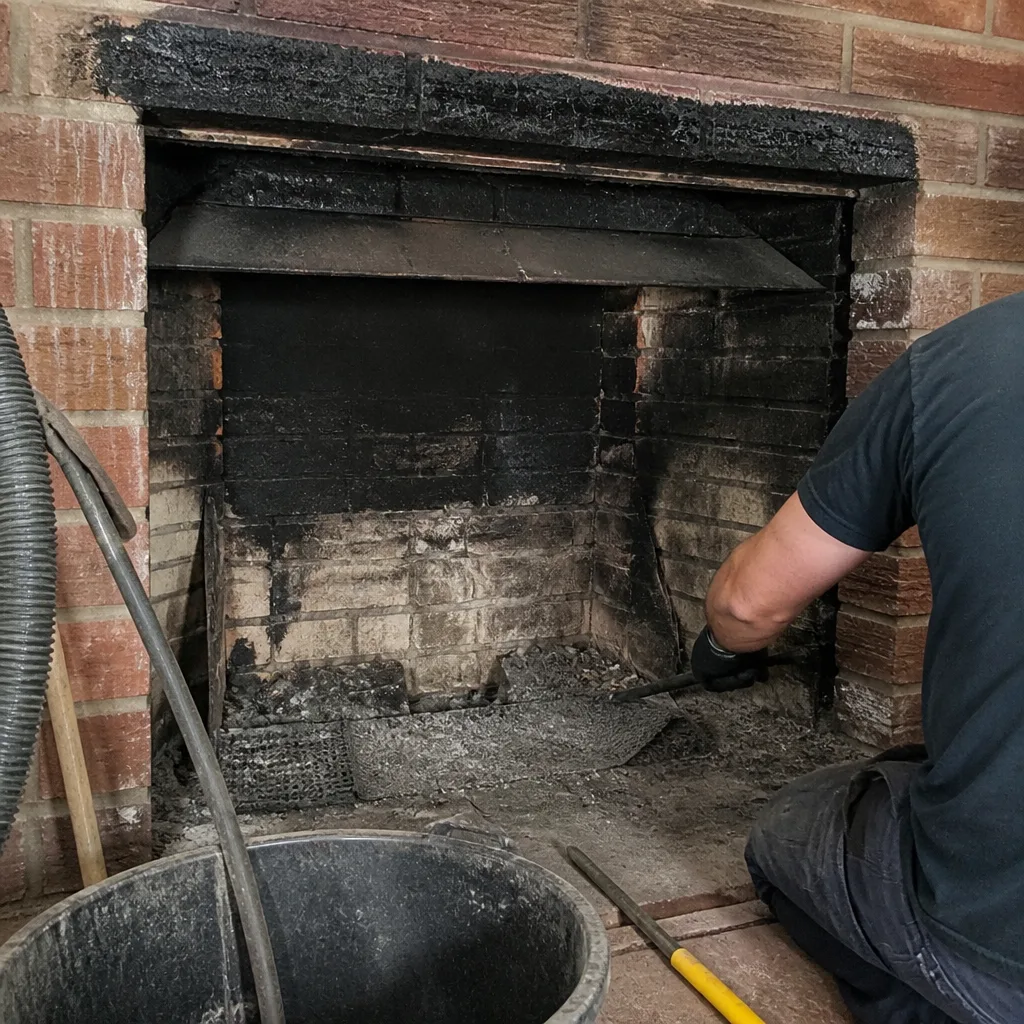 Before
 After
 Before
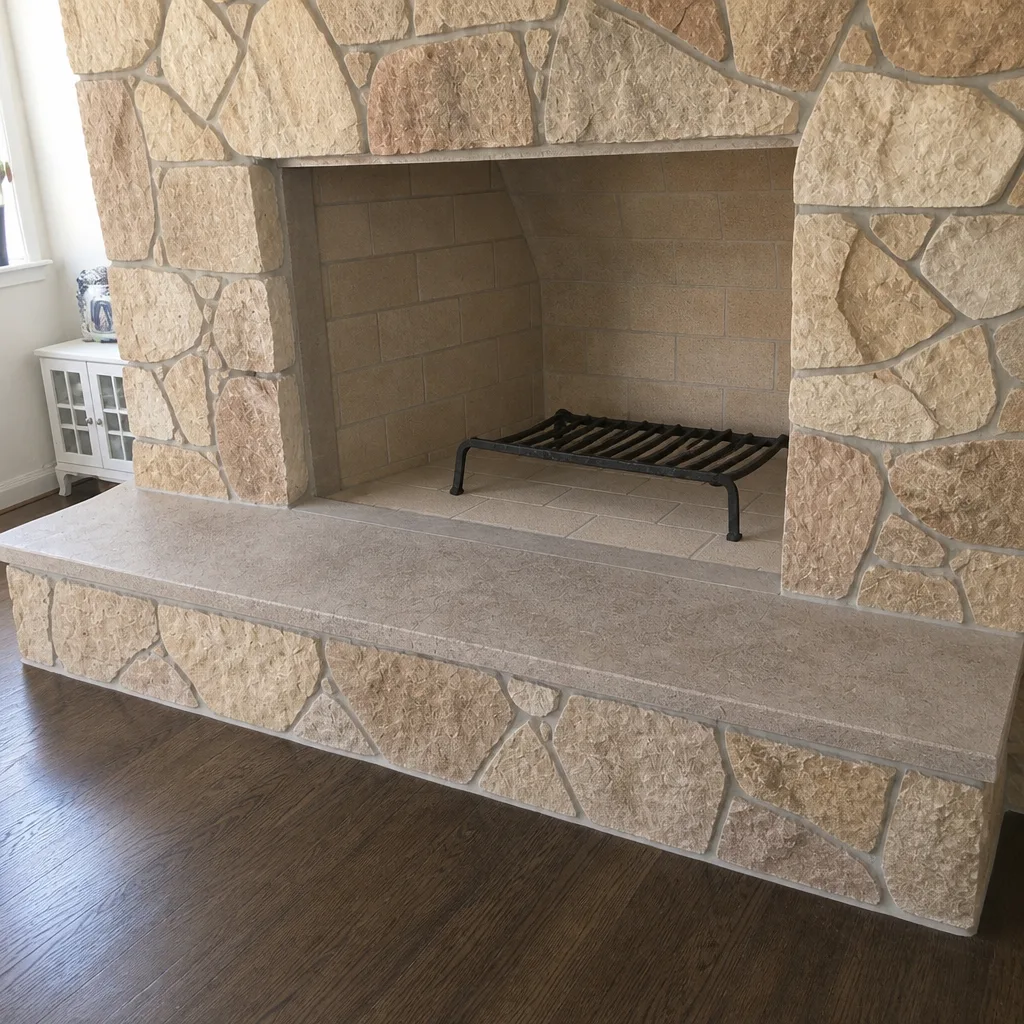 After
Common Mistakes to Avoid
- Cleaning without inspecting. A brush pass with no camera inspection is the most common DIY mistake, and it leaves the most important question – is the liner sound – completely unanswered. You’ve cleaned the chimney and learned nothing about its condition.
- Using the wrong brush size. A brush that’s too small skips the flue walls entirely. A brush that’s too large binds in the flue and can crack clay tile, especially in an older Huntington Beach chimney with a liner that’s already showing stress.
- Assuming stage 2 creosote is “just soot.” Flaky, crusty creosote is a different fuel class from powdery soot. A homeowner who brushes at it, sees some of it come off, and declares the job done leaves the rest of it in place.
- Ignoring the crown and cap. Water intrusion is the slow killer of chimneys in Huntington Beach, and it starts at the top. Skipping the exterior inspection because the inside “looks clean” is the mistake that costs the most later.
- Cleaning without documenting anything. If you sweep your own flue, take photos before and after and keep them. If you don’t, you have no maintenance record, which matters at claim time or at sale time.
- Testing the draft by lighting a fire after a self-sweep. If the flue is blocked or the damper has been knocked out of place by a rod, that fire will push smoke into the room. A professional sweep confirms draft before the fire is lit.
- Assuming a clean chimney is a safe chimney. Clean and safe are two different conditions. The cleanest flue in Huntington Beach can still have a cracked liner, a failing crown, and a cap that hasn’t been attached properly. Only an inspection catches those.
When to Call a Professional
Call a professional chimney sweep if any of the following is true: you’ve never had a camera inspection of your flue, you’ve burned through more than one season without a sweep, you see flaky or glazed creosote, you’ve noticed water staining or a cracked crown or a damaged cap, you’ve heard or seen animal activity, you’ve had smoke roll back into the room, your chimney has sat unused for years and you’re about to start using it again, or you simply want a written record of condition before the heating season starts. Those are all reasons a sweep with a camera and a report is the right call.
Huntington Beach Chimney Sweep offers free estimates in Huntington Beach – call (877) 792-6728. The inspection findings come with photos of what we found, and we tell you plainly when something can safely wait. Our technicians have up to 9 years of experience, and we install materials from professional-grade brands – DuraFlex and Olympia Chimney liner systems, HeatShield restoration, and Famco and Copperfield caps and crowns – so the fix matches the diagnosis without a second contractor involved.
Frequently Asked Questions
Yes, if your flue has only light dry soot, your liner was confirmed sound by a recent professional inspection, and you have no animal activity or water issues. In every other case, DIY cleaning skips the inspection that actually tells you whether the chimney is safe, so a professional sweep is the right call. Call (877) 792-6728 for an exact quote – estimates are free.
A standard chimney sweep in Huntington Beach typically runs in the low-to-mid hundreds of dollars, and pricing is set per job by a written estimate rather than a flat advertised rate. The cost depends on the flue size, the creosote stage, roof access, and whether an inspection with camera documentation is included. Call (877) 792-6728 for a free estimate on your specific chimney.
You won’t know it’s there until something goes wrong – a chimney fire, smoke rollback, or water damage that’s had another season to spread. The brush doesn’t reveal the problem and doesn’t create a record you could use at claim time. Call (877) 792-6728 and we’ll do the inspection your brush can’t.
For most Huntington Beach homes, an annual inspection and a sweep when the creosote accumulation warrants it is the right cadence, and heavily used fireplaces should be swept more often. The seasonal burn pattern here means an annual inspection catches issues before they compound over multiple seasons. Call (877) 792-6728 to book yours.
You need a new liner when the camera shows the existing liner has failed, is cracked at the joints, or is spalling badly enough that it’s no longer a barrier between the flue gases and the framing. That’s a specific finding, not a general recommendation, and it should come with photos you can see yourself. If the liner is sound, it’s sound, and we say so. Call (877) 792-6728 if you want a second opinion on a liner recommendation you’ve already received.
Creosote accumulates, and stage 1 becomes stage 2 becomes stage 3 – and stage 3 creosote is the fuel that chimney fires burn. Separately, moisture gets into the crown and cap, works into the masonry, and the repair grows from a cap replacement to a crown rebuild to structural work. Skipping a sweep doesn’t save money, it defers a larger bill. Call (877) 792-6728 and we’ll tell you where your chimney actually stands.
The Bottom Line
The DIY vs professional chimney cleaning question is usually framed as a cost decision, but in Huntington Beach it’s really a diagnostic one. A $40 brush kit can clean light soot off a flue that’s already been confirmed sound. It can’t tell you whether the liner is intact, whether the smoke chamber is safe, whether the crown is keeping water out, or whether the cap is doing its job. Those are the questions your chimney actually needs answered, and they require a camera, a trained eye, and a written record. If your chimney fits the narrow DIY case – recent inspection, light soot, no other issues – brush it and book the next inspection on schedule. If it fits any of the other six categories in the decision matrix, call a professional. The clean part is easy. The safe part is what you’re paying for, and it’s worth it.
Call (877) 792-6728 for a free estimate. We answer 24/7. Fast dispatch from 7am to 7pm, Sunday through Friday.
Written by the team at Huntington Beach Chimney Sweep.